There are so many considerations when choosing a new kitchen worktop, from materials to sink cutouts. But one detail that often gets overlooked is worktop thickness. The size you pick doesn’t just affect appearance, but it can influence durability, practicality and even installation options. 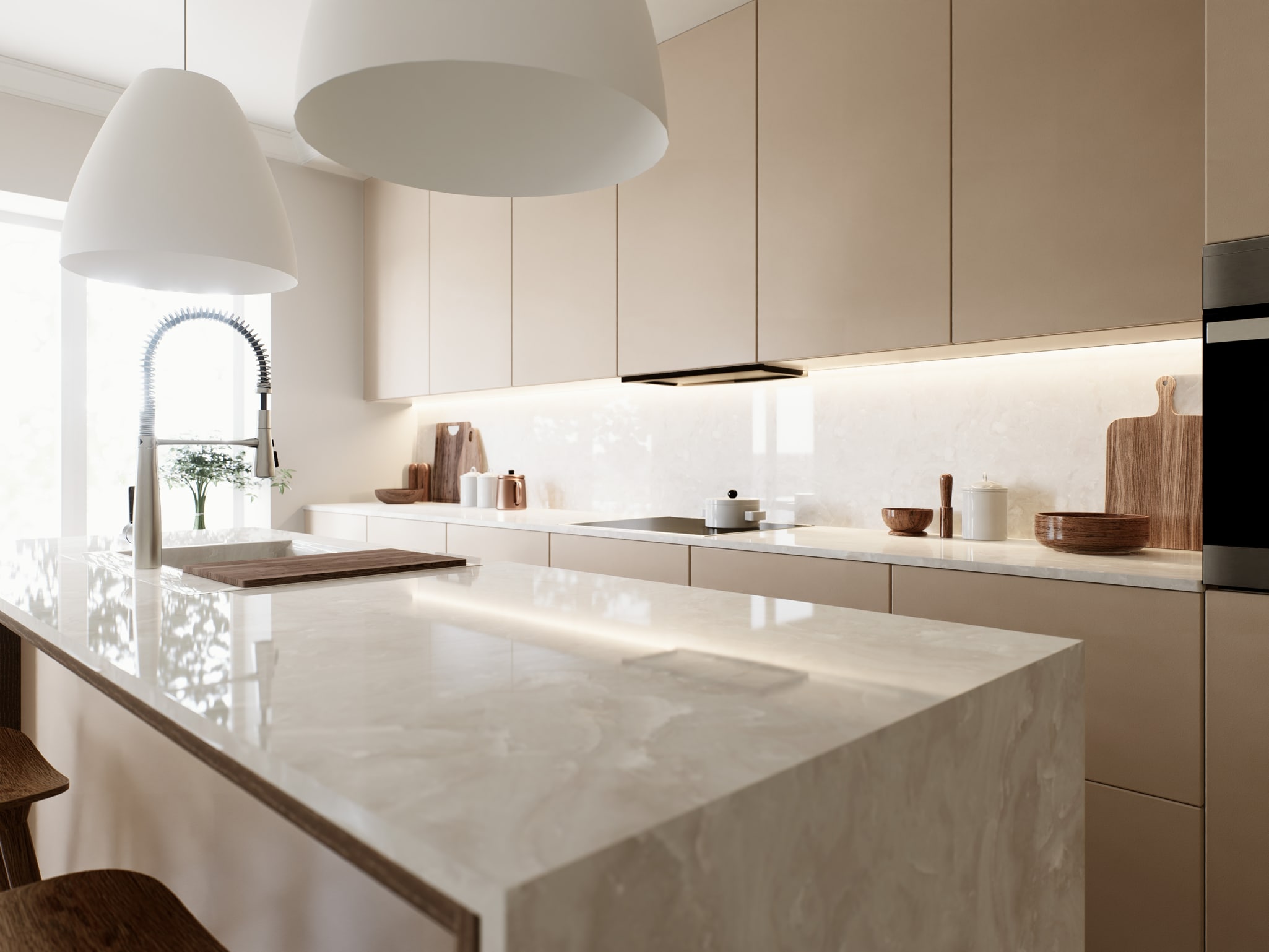
Whether you’re renovating your home or designing a kitchen from scratch, understanding kitchen worktop thicknesses will help you make an informed decision. Here’s how to achieve the right balance of style, practicality and material performance.
Does kitchen worktop thickness matter?
Kitchen worktop thickness matters more than most people realise, affecting both the design and functional needs. A thicker or thinner profile completely changes the look and feel of your kitchen. Thinner worktops produce a sleek, contemporary style ideal for minimalist spaces, while thicker worktops give a more substantial, premium appearance.
Beyond aesthetics, thickness can also affect structural strength, the maximum overhang for your breakfast bar, how much the material can support (e.g., appliances or sinks), and the type of edge profile that can be created.
What’s the standard thickness for a UK kitchen worktop?
In the UK, the most common worktop thicknesses are 20mm, 30mm and 40mm, depending on the material. 20mm profiles are sleek and modern with a minimalist appearance. 30mm is the most common worktop thickness, offering a good mix of strength and visual appeal.
Thicker 40mm worktops provide additional durability and a more luxurious aesthetic. This thicker size is often preferred for larger kitchens.
Are there benefits of thick kitchen worktops?
If you want to go for a 40mm worktop, there are several advantages. This includes enhanced durability with greater strength, reducing the risks of warping, cracking or damage over time. It also provides better support for breakfast bars, overhangs and otherwise unsupported edges.
Thicker kitchen worktops can also create a bold, solid look for a premium feel. Many homeowners opt for a chunky worktop to make the kitchen feel more luxurious or traditional.
However, thicker isn’t always better. Heavier worktops may require additional cabinet support and be more expensive compared with slimline alternatives.
Can worktop materials come in any thickness?
Not quite. Different materials have manufacturing limits, and some are designed to perform best at specific thicknesses. For example, quartz and granite worktops typically come in 20mm or 30mm, although some suppliers offer ultra-slim profiles.
You’ll need to enquire with your installer to find out more about specific worktop material thicknesses. Some (like solid surfaces) can even be applied in thin sheets, built up at the edges to create a ‘thicker-looking’ profile.
Are thicker kitchen worktops more heat-resistant?
Thickness alone doesn’t determine heat-resistance – the worktop material does! For example, some materials (like granite and quartz) are naturally more heat resistant, despite their thickness, compared to laminate surfaces. Compact laminate performs better because of its dense core.
Read more in our blog on: Are my worktops heat-resistant?
Contact Olly London today for a worktop installation quote
Olly London conducts professional kitchen worktop installations across the South East, coming out to Horsham, Hounslow and beyond. For a free kitchen worktop consultation, get in touch.